Taif - An App to help People with Autism

Empowering parents of autistic children with a clearer, calmer, and more supportive way to navigate daily developmental challenges.

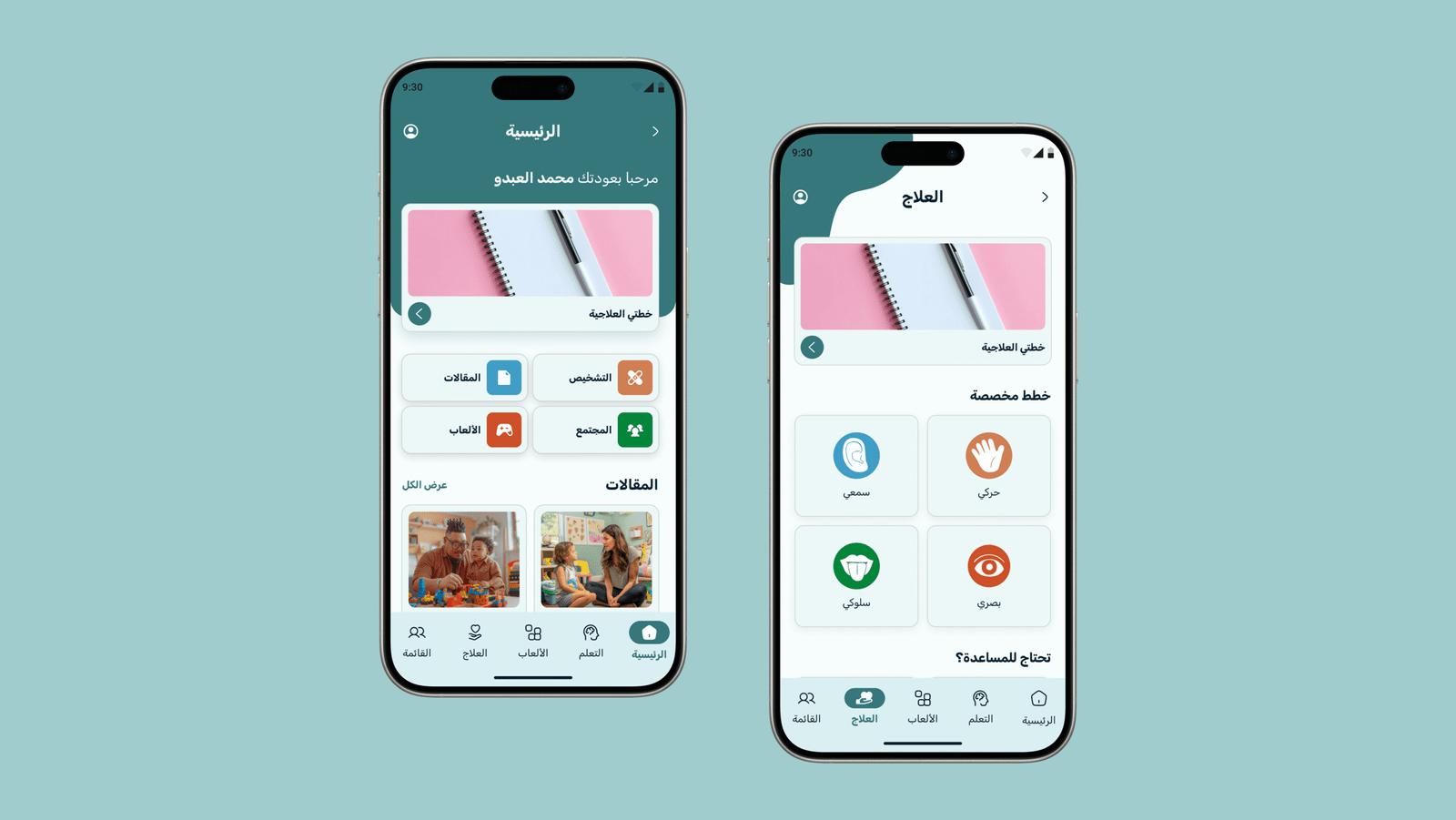
Screens showing the Taif app home interface and therapy categories for autistic children, including personalized plans and activity sections.

The Context

Autism affects how children sense the world and express their emotions, leaving many parents unsure about which activities to use, how to avoid overwhelm, and how to support their child effectively.
Even with therapy centers and specialists, families still need a simple, structured way to continue development at home—especially for sensory, emotional, and communication skills.
Taif was created to be that support: a digital companion that guides parents through their child’s developmental journey with clarity and confidence.

Role

Product Designer

Language

Arabic

Skills

User Research, Accessibility, Wireframing, UI Design

The problem

Parents of autistic children struggle to support development at home due to unclear guidance and inconsistent structure.
Most existing tools aren’t sensory-friendly and don’t help track how the child feels or progresses.

How can we help parents support their autistic children in a clearer, calmer, and more effective way?

My Starting Point & First Challenge

Being new to designing for autistic users, I quickly realized that standard UX patterns weren’t enough. Their sensory and emotional needs required deeper understanding.
Before designing anything, I stepped back to learn what overwhelms them, what calms them, how they engage, and what parents struggle with every day.
Research became my first step.

Research Approach

I began with desk research to understand autism, sensory needs, ABA, occupational therapy, and how autistic children engage with the world. I focused on how they react to colors, sound, structure, emotional demands, and communication tools like PECS.
I also reviewed therapeutic games to see what supports learning — and what can easily overwhelm them.
From this research, a few clear patterns emerged:
 

  • Sensory-friendly design matters.
    Soft colors, gentle visuals, and predictable patterns help autistic children stay calm and focused.

  • Routine builds safety.
    Step-by-step structure reduces anxiety and keeps engagement steady.

  • Parents need clarity.
    Their priorities center around emotional well-being, social development, independence, and a simple way to track progress.

  • Positive reinforcement works.
    Small rewards improve motivation and behavior regulation.

  • Choice increases participation.
    Allowing the child to select activities reduces resistance and improves engagement.

How can we use these insights to build an experience that truly solves the problem?

The Solution — Taif App Structure

Taif focuses on providing simple, guided therapeutic activities that support the child’s development while reducing overwhelm.
We’ve divided the healing process into four different Categories:

  • Physical / Motor Activity
  • Auditory Development
  • Hearing & Sound Recognition
  • Sensory Integration

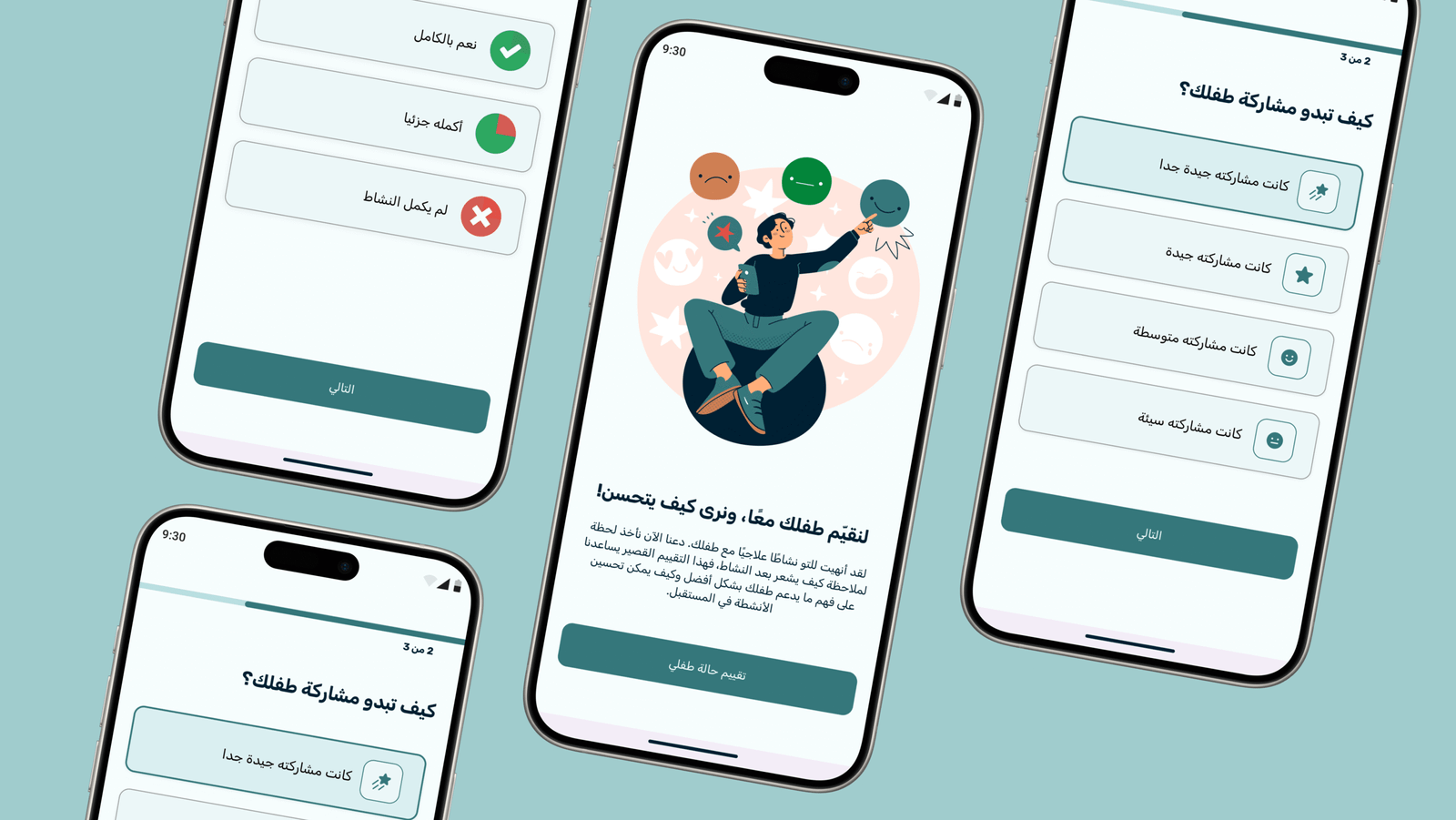
Emotion Check after Each Activity

After each task, parents complete a quick check-in to capture how their child felt.
This simple step helps track emotional patterns, understand triggers, and improve future experiences — while gradually building emotional awareness for the child over time.

Screens showing the activity evaluation process in Taif, including emotional check-ins and child participation assessment after completing therapeutic tasks.

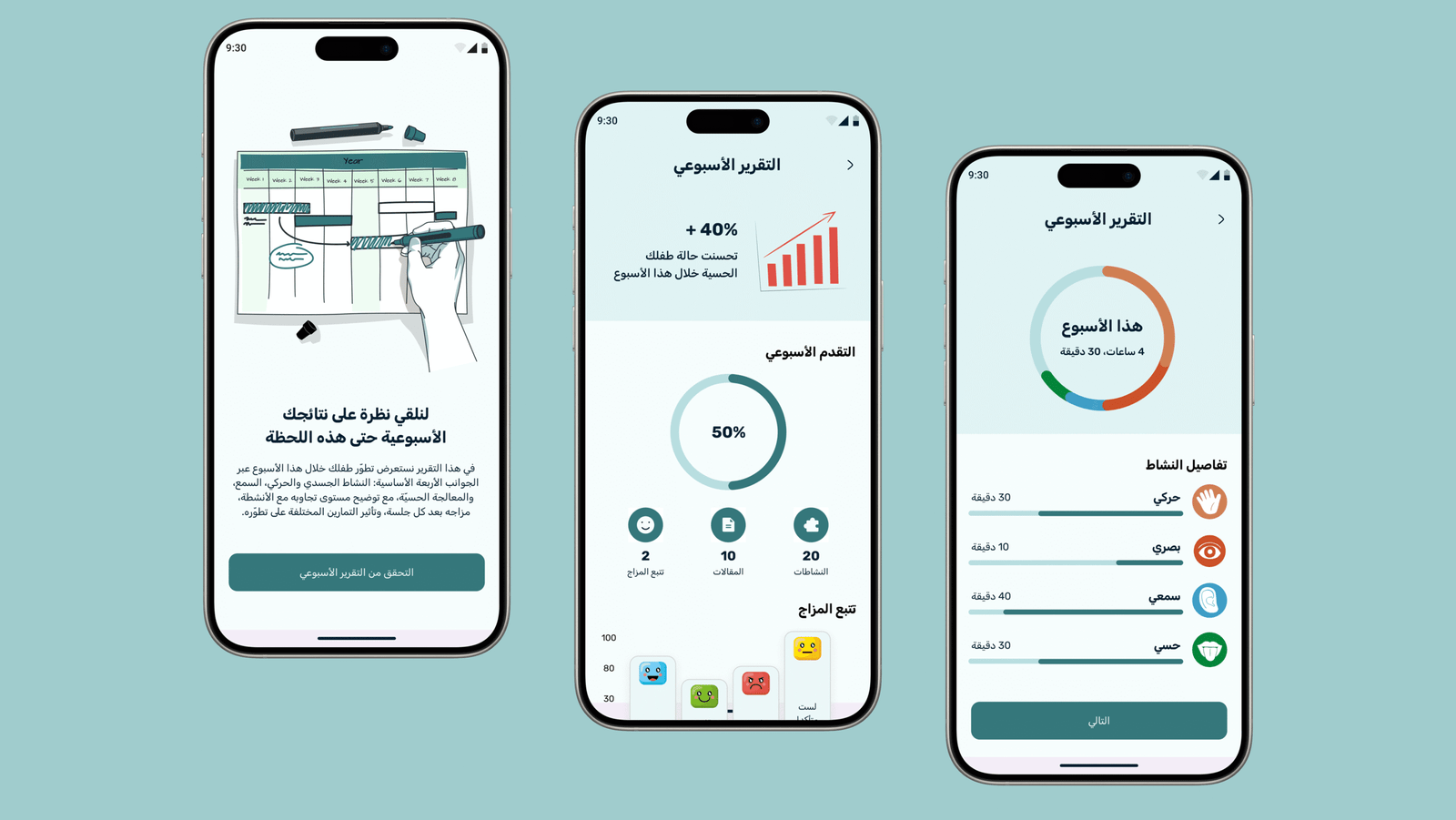
Weekly Progress Report

After each task, parents complete a quick check-in to capture how their child felt.
This simple step helps track emotional patterns, understand triggers, and improve future experiences — while gradually building emotional awareness for the child over time.

The parents can check out the report each week to see how mych progress their child has made.

Screens showing Taif’s weekly progress report with charts, activity summaries, and developmental insights for autistic children.

But this app will be used by children — isn’t it boring to just do tasks?

Integrating Meaningful, Non-Overwhelming Games

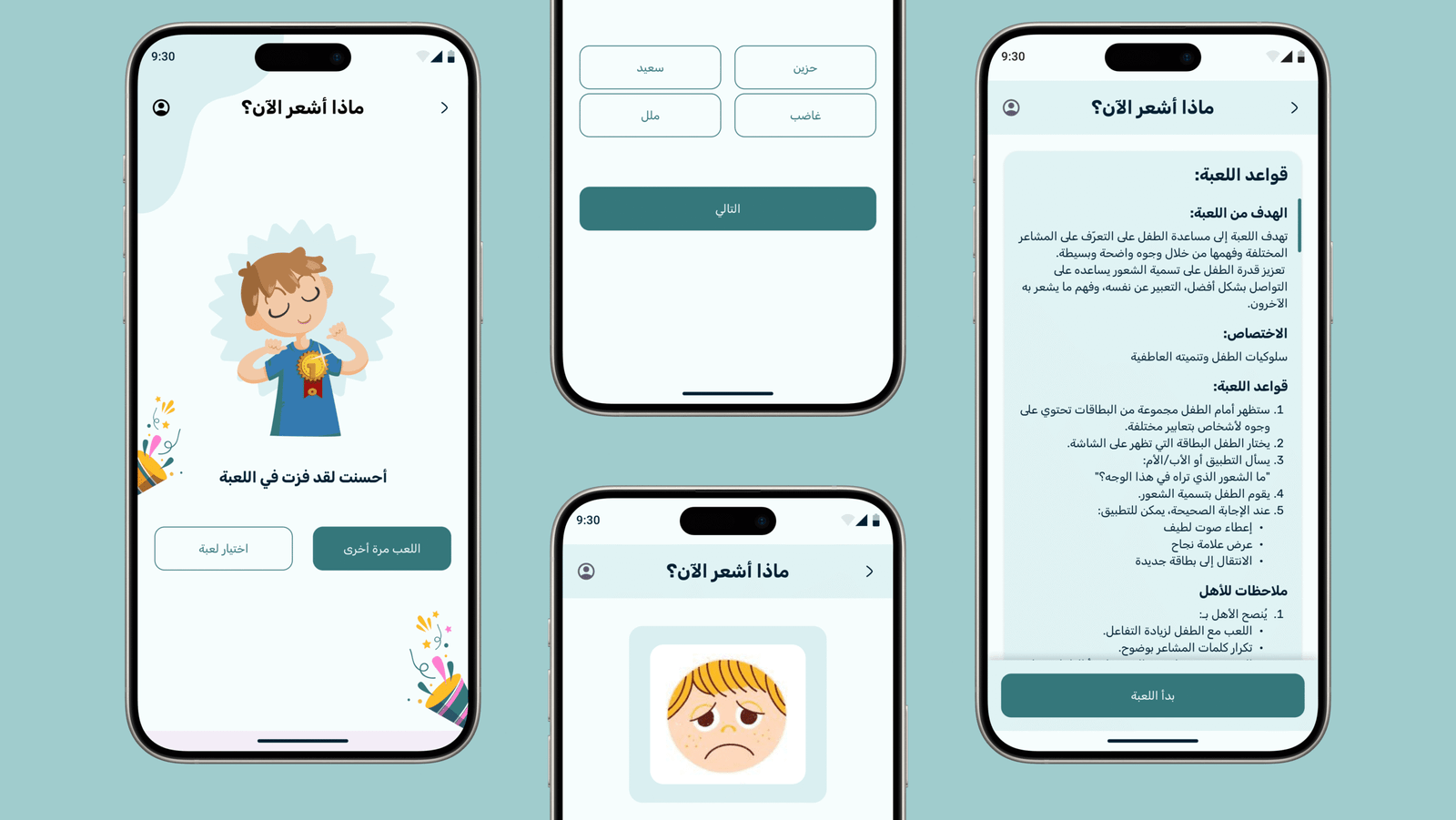
To make the experience engaging without overstimulation, I introduced calm, therapeutic mini-games such as:

  • Emotion recognition cards

  • Shape identification

  • Animal sound recognition

These games are intentionally:

  • Simple
  • Slowly paced

  • Designed with muted colors

  • Parent-guided

  • Predictable and comforting

The purpose is not entertainment — it is structured learning through gentle engagement.

What went well

  • Successfully translated autism research into a sensory-safe digital experience

  • Balanced needs of both parents and children

  • Created a predictable, calming structure that supports emotional regulation

  • Developed a clear progress-reporting system that makes parents feel supported

  • Built engaging activities without overstimulating autistic children

Lessons learned

  • Deep sensitivity, patience, and curiosity

  • A complete rethink of traditional UX patterns

  • Respecting sensory boundaries

  • Designing for both the child and the parent simultaneously

  • Building experiences that are therapeutic, not distracting

i'd love to chat about design, Music, or good food!

Scroll to Top